One of the most effective and advanced solutions for decontamination is the hydrogen peroxide procedure (VHP). This method stands out for its effectiveness, versatility and ability to eliminate a wide range of microbiological contaminants.
Let us explore in detail this operating method, its applications and its advantages compared to other decontamination methods.
What is the hydrogen peroxide procedure (VHP)?
The hydrogen peroxide procedure (VHP) is a decontamination technique that uses hydrogen peroxide vapour to sterilise surfaces and environments. Our POSS system represents an evolution of this technology. It does not use vapour, as it does not require heating and vaporising hydrogen peroxide. Instead, it employs a modern cold technology based on ultrasound.
VHP is particularly effective against a wide range of microorganisms, including bacteria, viruses, fungi and spores. This technology is widely used in the pharmaceutical sector to ensure sterile and safe environments.
Operating principles
In the traditional method, hydrogen peroxide is vaporised and evenly distributed throughout the area to be decontaminated. The vapour penetrates surfaces and crevices, destroying microorganisms through oxidation of their cell membranes, proteins and DNA.
Specifically, the two main stages involve converting liquid hydrogen peroxide into vapour using a VHP generator and distributing the vapour into the environment through a controlled ventilation system.
Our POSS system instead harnesses the oxidising properties of hydrogen peroxide through a cold procedure using ultrasound.
Compared to traditional VHP technology, it does not require a ventilation system, as the generated hydrogen peroxide behaves like a gas and fully saturates every point of the area, eliminating the possibility of blind spots.
This evolution makes the process much simpler as well as more effective.
VHP is capable of reaching and decontaminating complex surfaces and hard-to-reach areas, and it is effective against a wide range of pathogens, including those resistant to other decontamination methods.
The advantages of VHP
A number of particularly relevant advantages derive from the use of this procedure and can be grouped into specific areas:
Effectiveness
Its ability to penetrate complex surfaces and kill a broad spectrum of microorganisms makes VHP an excellent choice for clean rooms and other critical environments.
It is effective against bacteria, viruses, fungi and spores and removes biofilms and other persistent contaminants.
Safety
VHP is safe for both the environment and personnel. After the decontamination cycle, hydrogen peroxide decomposes into water and oxygen, eliminating the risk of toxic residues.
Most systems on the market use high concentrations of hydrogen peroxide, between 25% and 40%. We use hydrogen peroxide at 7.5%, ensuring greater safety with the same level of effectiveness.
Versatility
The hydrogen peroxide procedure can be used to decontaminate a wide variety of surfaces and environments, including instruments, equipment, clean rooms and HVAC systems.
Efficiency
VHP is a rapid and effective method. Decontamination cycles are short, reducing downtime and increasing operational efficiency.
Possible applications
In which cases does the hydrogen peroxide procedure represent a highly efficient solution?
Clean rooms
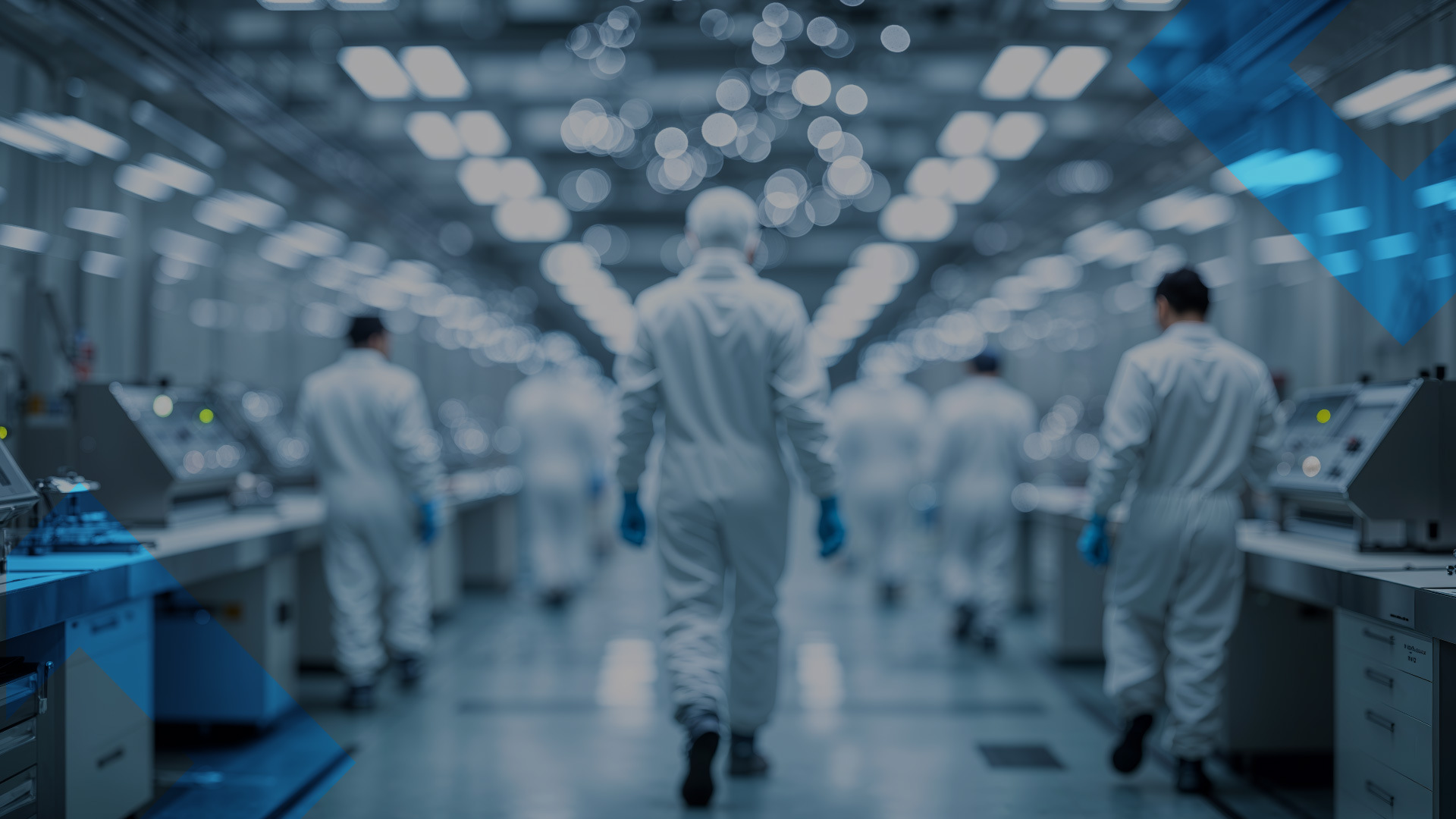
Clean rooms in the pharmaceutical sector must maintain extremely low contamination levels. VHP is ideal for decontaminating these areas, ensuring that sterile conditions are maintained.
Regular decontamination cycles can be set to maintain sterile environments and prevent cross-contamination.
Equipment and instruments
Equipment and instruments used in pharmaceutical manufacturing must be regularly decontaminated. VHP is effective for this purpose, even in the case of complex surfaces and delicate instruments, as it can penetrate hard-to-reach areas.
HVAC systems
Ventilation and air conditioning systems (HVAC) can become a source of contamination if specific procedures are not regularly carried out. VHP can be used to decontaminate these systems, ensuring a clean and safe airflow by removing microorganisms and airborne contaminants.
Biocontainment
In biosafety laboratories and biocontainment facilities, VHP is used to ensure that there is no leakage of pathogenic agents. This is crucial for staff safety and for preventing the spread of disease.